Capabilities in context / 03
Before you tool the tray
Moving equipment from foam to molded fiber? Follow one carton all the way to the customer before you commit to a mold.
SINOVAlink · Packaging engineering & procurement
A distributor receives a pallet of instruments, opens the wrap and sends one boxed unit to a service engineer by parcel. Which journey did the packaging team qualify? If the trial ended with the pallet intact, it missed the part of the trip when a single carton was handled on its own.
For an equipment maker, the first purchase is usually a small run of representative packs and a test against the current design. For a packaging converter, the decision to buy molds or a forming line comes later: which customers will use it, for which parts, and at what repeat volume?
01 / An OEM's design choice
The outer box is part of the decision
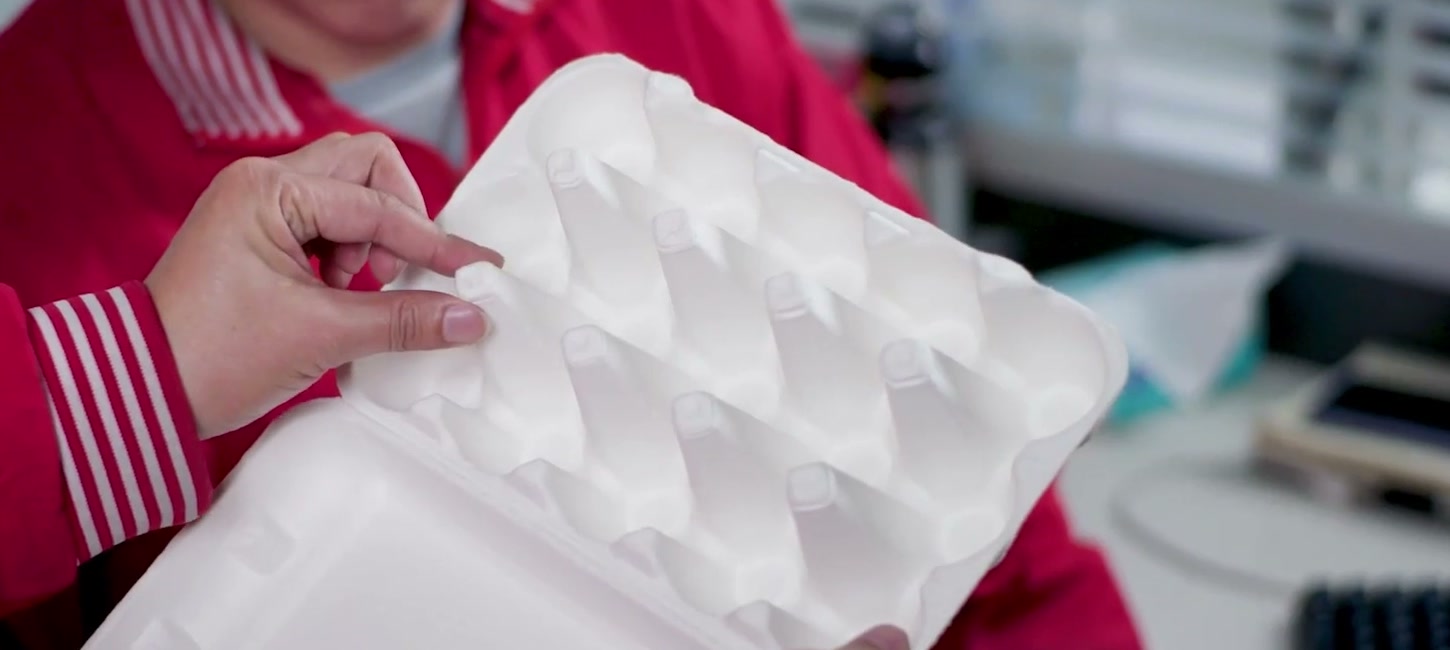
Brother redesigned the molded pulp cushions for a printer. Instead of surrounding the machine with bulky supports, its engineers concentrated the material at the upper and lower corners. They used one shape for the top corners and another for the bottom corners. That left fewer shapes to produce and store. Brother says the new design went into use in Australia in March 2024.
Brother’s figures for its new design versus its previous molded pulp design, not versus foam. Read the design account.
Another equipment maker reached two different answers. Epson reports using corrugated cardboard for cushioning in its ET-4810 printer series and molded pulp for its EB-L890E projector series. If a folded insert protects your equipment and the packing team can reproduce the fold reliably, keep it in the trial. It gives the custom mold a useful competitor. Epson’s published packaging examples.
02 / Before the sample run
Write down where the pallet gets split
Pick one product and one destination. Ask the distributor how the last unit actually travels, including repacking, storage and any individual parcel leg. Give the packaging converter the product mass, the surfaces that can carry load and anything a cushion must not touch: a lens, a connector or a calibrated control. Ship the accessories in their usual positions. A loose power supply can damage the product even when the outer box looks fine.
Have the quality lead define a failure before the trial. A carton can be scuffed and still do its job. An instrument that arrives out of calibration can look perfect. Agree who will run the functional check after testing, which marks are unacceptable and what would trigger redesign. Keep the current pack as a control.
03 / The purchase order
What would one extra damaged unit cost?
Compare the cost per shipment on the same route. Include the inserts and carton, time at the packing bench, any change in freight charged, and the cost of a damage incident: collection, replacement, investigation and repeat freight. Ask purchasing for the carrier invoice. A smaller box saves cash only if it changes the actual charge or load plan.
This calculation tells procurement how sensitive the decision is. A short pilot cannot establish a difference that small. Use the lab to screen the design, then track returns by pack revision and shipping route during a controlled rollout. A mandatory protection requirement still applies even when the arithmetic looks attractive.
04 / From sample to production
Order inserts, tooling or a line?
Equipment maker: buy a trial pack.
Ask a converter to quote samples plus the first batch, with mold ownership, revisions and future supply priced separately. Compare a local converter and the current pack on the same brief. Where the product is still changing, ordering finished inserts can keep the next design revision affordable.
Converter: price good parts, not machine cycles.
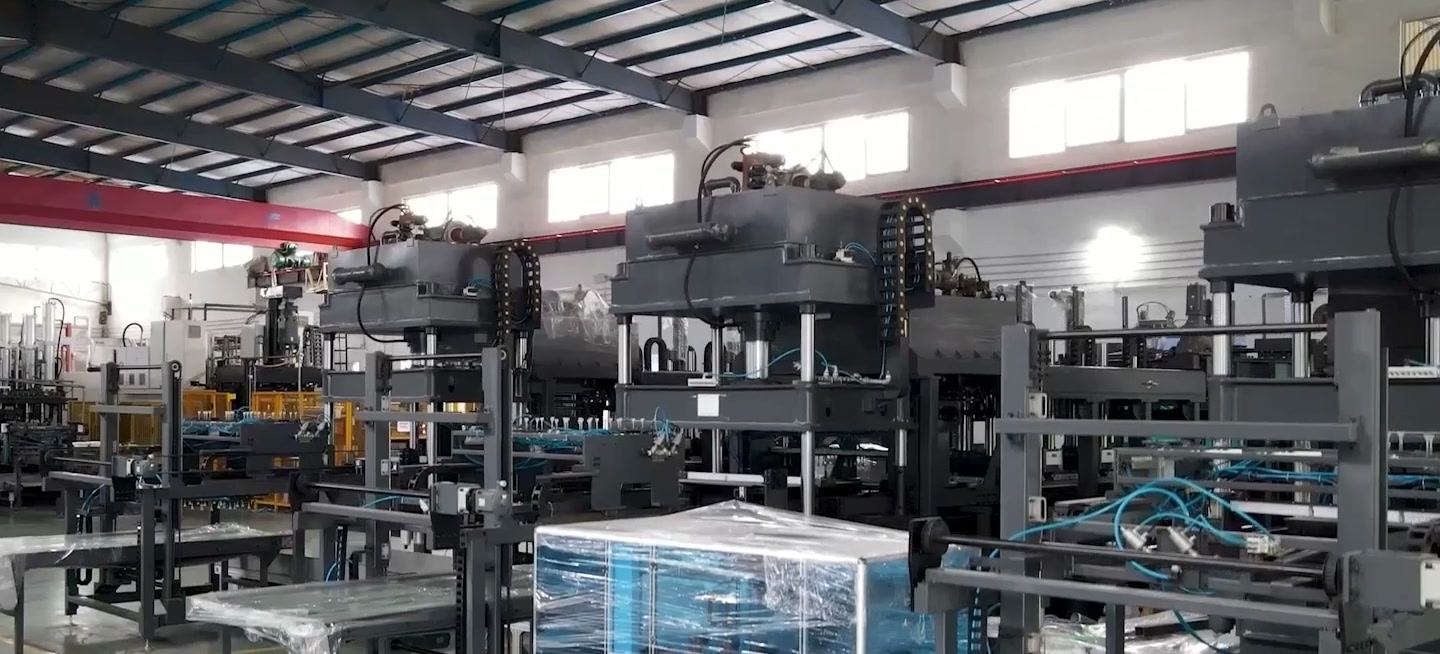
Once the geometry repeats and there is credible volume, compare using spare capacity, commissioning a tool for an existing line, or installing a new line. BeSure makes industrial pulp molding equipment and molds. Its production route includes pulping, forming and drying. For an investment review, ask for output of accepted inserts with your fiber and geometry, changeover loss, utilities, maintenance cover and the site work excluded from the quote.
Pack-out lead: add a robot only if picking is the constraint.
Time an operator separating nested inserts and placing them in the carton. If inserts travel on a conveyor and that task limits output, QKM’s Delta pick-and-place capability is worth investigating with the local cell integrator. Trial the actual stack and gripper: count double picks, missed picks and recovery time. If drying limits output, or the existing line already handles the parts, leave the extra robot out of the budget.
Bring us one pack decision
Tell us what you ship, where the carton travels and what you are deciding: sample inserts, production tooling or a packing-cell change. We can help frame a comparable trial with the converter, equipment specialist or local integrator the decision calls for. Your quality team keeps authority over product release.
Discuss your packaging project →Entering a second market?
If you already make molded fiber packaging and want to win equipment makers in a new country, the commercial question is different. Which OEM specifies the cushion, which converter can run the local trial, and who releases the first shipment? Bring one target market and one equipment application. We can scope the route to a first qualification conversation without assuming you need new machinery.